

 By
By The step-by-step Pinterest growth guide for bloggers, creators & business owners
Pinterest is a search engine that happens to look visual. Half a billion people use it every month, and they’re mostly there with a purpose, looking for a recipe, a room idea, a product they’ve half-decided to buy. That’s different from social media, where people are just passing time.
The reason most accounts go nowhere is simpler than people want to admit: they post randomly, skip keywords, and wait for an audience that never comes. Pinterest doesn’t reward that. This guide is about what it does reward.
1. Set Up a Business Account (Don’t Skip This)
A Pinterest Business account is free. It unlocks Analytics, the Trends tool, Rich Pins, and ads, none of which you can access on a personal account.
You can create at: Pinterest Business Account
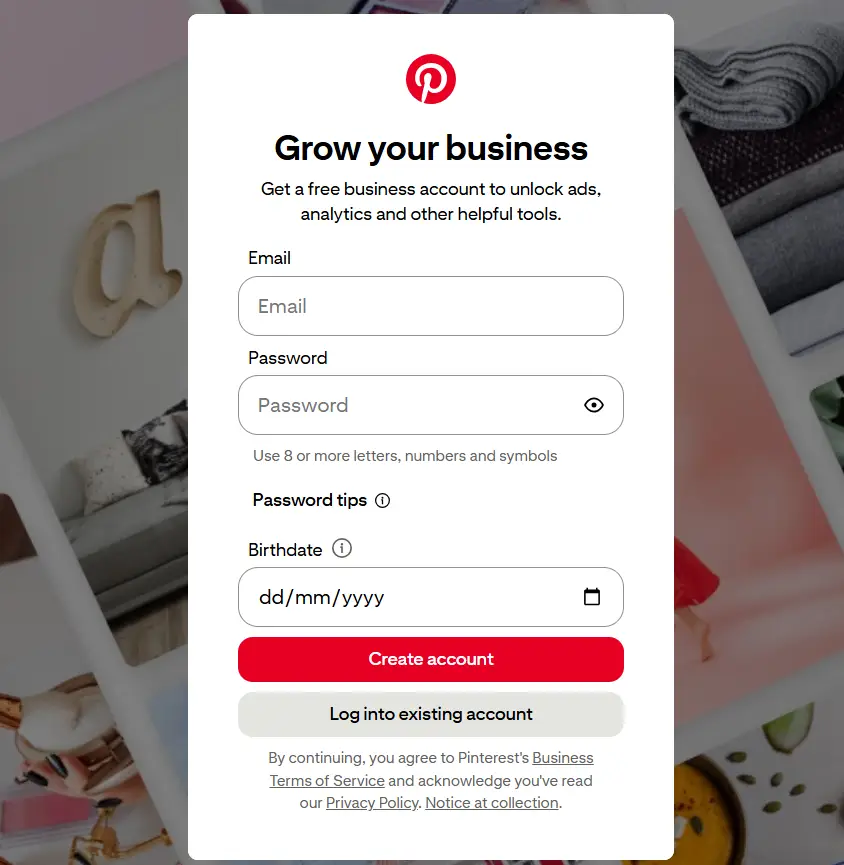
Put your basic details to get a business account on Pinterest
Once you’re in, claim your website. Pinterest uses this to verify the source of your content, which affects rankings. It also activates Rich Pins, these pull live metadata from your site, so a recipe pin shows cooking time, a product pin shows price, that kind of thing.
2. Optimize Your Profile for Pinterest SEO
Pinterest’s algorithm reads your profile like a webpage. Every word you use is indexed and matched to user searches. Here’s how to get it right:
- Display Name: Add your primary keyword. Example: ‘Jane Doe | Budget Home Decor & DIY Ideas’
- Bio (160 chars): Lead with who you help and what you offer. Include 2–3 natural keywords.
- Profile photo: Clear headshot or branded logo, consistent with your other platforms.
- Website link: Point it to your blog, shop, or link-in-bio page.
| 💡 Pinterest searches your display name separately from your bio, put your most important keyword in your name field for maximum discoverability. |
3. Build Boards That Rank in Pinterest Search
Start with 8–12 focused boards. Each one should represent a specific subtopic within your niche. The formula for high-ranking board names: [Adjective] + [Topic] + [Content Type], e.g., ‘Easy Healthy Dinner Recipes for Families’ or ‘Modern Farmhouse Bedroom Decor Ideas’.
Write a full board description (up to 500 characters) using natural, keyword-rich language. Think about what your audience types into the search bar, and use those exact phrases.
4. Do Pinterest Keyword Research (The Growth Multiplier)
Pinterest SEO is the single highest-leverage skill for account growth. Unlike Instagram, Pinterest doesn’t rely on hashtags, it relies on keywords embedded in your pin titles, descriptions, board names, and even image alt text.
Find the best keywords using these free sources:
- Pinterest Search Autocomplete: Start typing your topic, every suggestion is a real search query.
- Guided Search Bubbles: The clickable filters that appear after a search reveal related keyword clusters.
- Pinterest Trends (trends.pinterest.com): See rising vs. declining search terms with seasonal data.
5. Create Pins That Stop the Scroll
Use 1000 x 1500px (2:3 ratio) for every pin, which is Pinterest’s recommended size and performs best in the feed. Beyond dimensions:
- Bold, readable fonts: Your headline must be legible at thumbnail size.
- High-contrast colors: Bright, warm tones outperform muted palettes in click-through testing.
- Clear value proposition: The text on your pin should instantly communicate what the reader gets if they click.
- Video pins: The fastest-growing format on Pinterest in 2026. Even a 6-10 second loop drives significantly more engagement than static pins.
Create 3–5 different pin designs for the same piece of content to test headlines, colors, and formats. Your data will reveal what your audience responds to.

6. Post Consistently with a Real Strategy
Pinterest rewards fresh, original content posted regularly. Aim for 5–15 pins per day, but prioritize your own original pins over repins. Use a scheduler like Tailwind to batch-create a week’s worth of content in one sitting rather than posting manually every day.
Build a 60/40 content mix: 60% evergreen content (timeless topics people search year-round) and 40% trend-driven content aligned with what’s rising on Pinterest Trends right now.
| 📈 Pin trend-based content 6–8 weeks BEFORE peak season. Pinterest needs time to index and distribute new pins, early movers dominate the rankings when trends peak. |
7. Tap Into 2026 Pinterest Trends
Pinterest Predicts the platform’s annual trend forecast has an 88% accuracy rate. These are the trends already driving searches in 2026:
- Cool Blue Aesthetic: Ice blue is dominating fashion, home decor, and weddings. Use ‘powder blue bedroom,’ ‘icy blue wedding palette.’
- Afrobohemian Home Decor: Searches up 220%+. Try ‘rattan furniture ideas,’ ‘bamboo beaded curtains,’ ‘adire fabric decor.’
- Circular & Upcycled Fashion: ‘Upcycled clothing DIY’ searches up 132% YoY, huge for fashion creators.
- Niche Perfume & Scent Stacking: Up 500%. Beauty creators can lead with ‘fragrance layering tutorials.’
8. Track What’s Working and Double Down
Check Pinterest Analytics monthly. The metrics that matter most:
- Outbound Clicks: Your actual traffic metric, how many people clicked through to your site.
- Saves: Signal quality to the algorithm and extend your pin’s distribution life.
- Top Pins: Find your winners and create more content on those same topics and formats.
Pinterest growth compounds over 3–6 months. A pin you publish today can drive traffic for years. The accounts that win are the ones that show up consistently, optimize relentlessly, and stay patient.
Pinterest doesn’t reward perfection, it rewards consistency. Start today, optimize as you go, and trust that the content you create now is building traffic that will compound for years.